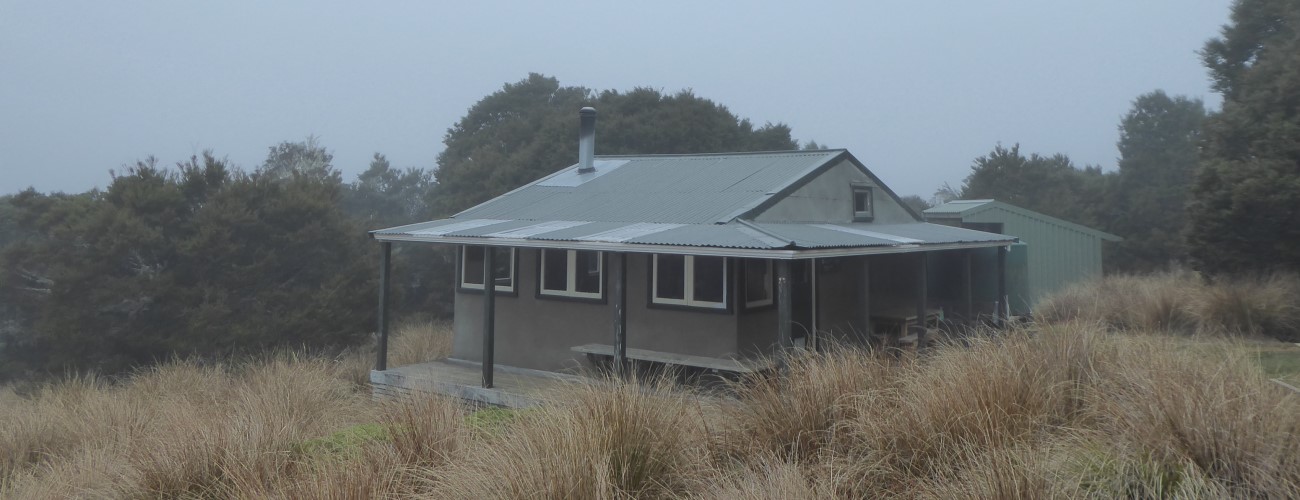
Balloon Hut
Kahurangi National Park
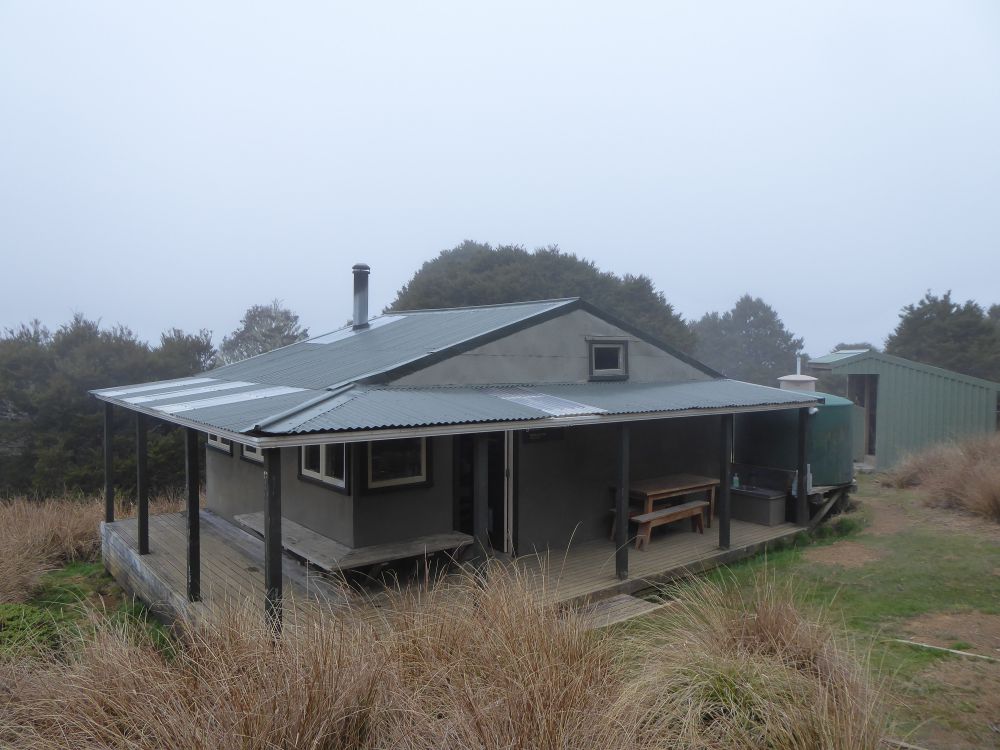
Balloon Hut is located at the end of Lake Peel Track, between Cobb Valley and Mt Arthur, in Kahurangi National Park. It’s a great destination for an overnight trip from Cobb Valley, and is also commonly used as a second-night stop on three-day trips from Flora car park to Cobb Valley. The climb to Balloon Hut from Cobb Valley will take you up and around the spectacular Lake Peel and Peel Range, before descending to the remarkable tussock expanse of the Tableland.
| Details | |
| Distances | 8.4 km Cobb Valley Rd to Balloon Hut via Lake Peel Track; 13.7 km Cobb Valley Rd to Balloon Hut via Cobb Ridge; 3.3 km Lake Peel to Balloon Hut; 4.1 km Balloon Hut to Salisbury Lodge; 16.6 km Balloon Hut to Karamea Bend Hut |
| Time Required | 4 hr one way to Balloon Hut via Lake Peel Track; 4 hr return to Lake Peel via Lake Peel Track; 1 hr 30 min Balloon Hut to Salisbury Lodge |
| Trail Type | Tramping track/Poled route |
| Physical Difficulty | Moderate |
| Uses | Walking and trail running |
| Start Elevation | 830 m (Cobb Valley) |
| Max Elevation | 1440 m (Peel Range) |
Cobb Ridge Track
Walking and trail running
Leslie-Karamea Track
Walking
Salisbury Lodge and the Tableland
Walking and trail running
2 hr 20 min from Nelson | 1 hr 20 min from Tākaka
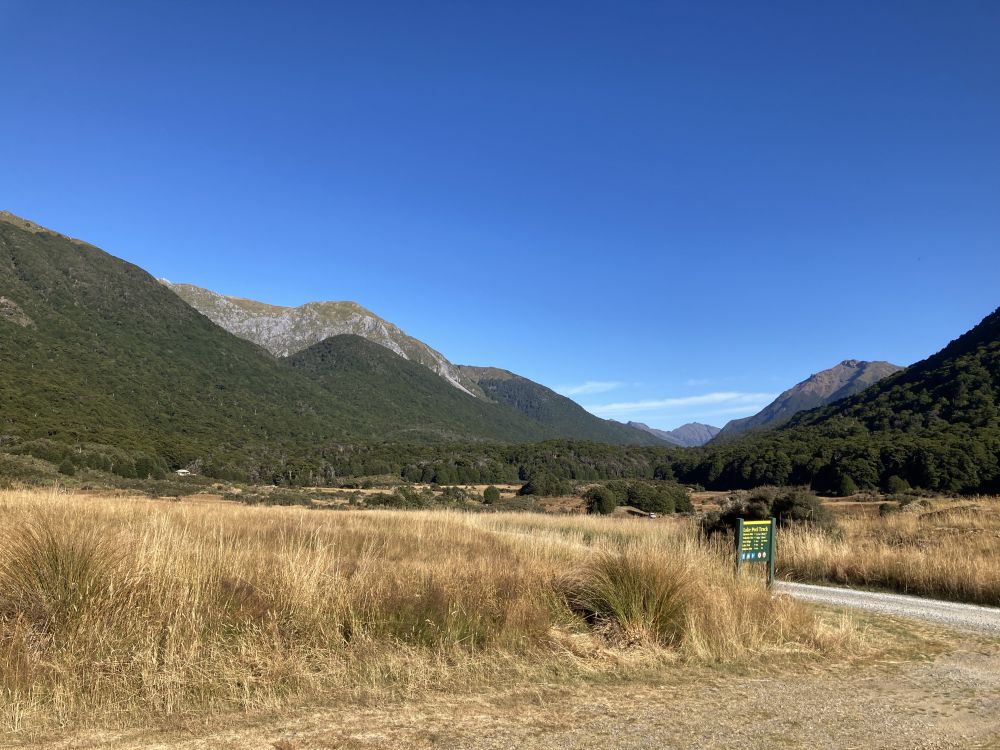
From Richmond, head west along State Highway 60. After you’ve driven over Tākaka Hill, turn left at Upper Tākaka onto Cobb Dam Road, and follow it up Cobb Valley. The road is narrow with steep drop-offs to the Tākaka River below, and it is unsealed beyond the turbine house. It reaches 1100 m elevation at Cobb Ridge, meaning snow and ice can be present throughout the year. When you reach the small collection of houses near the reservoir’s edge, turn left and follow the road all the way to the end of the reservoir, where there’s a small grassed car park on the left (signpost reads Lake Peel Track).
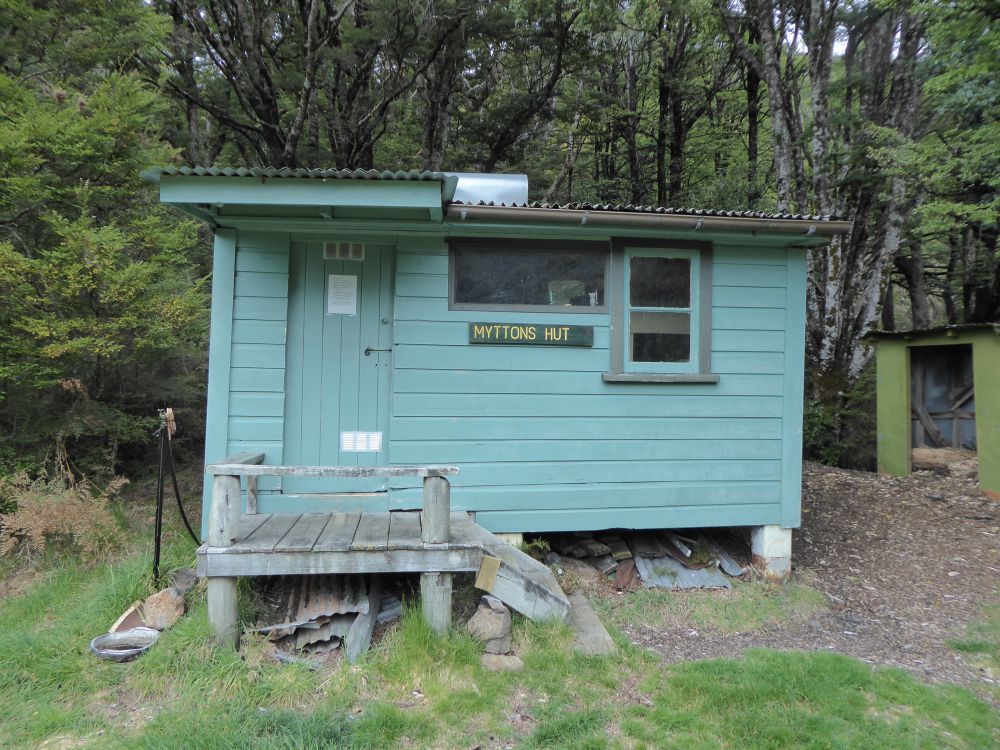
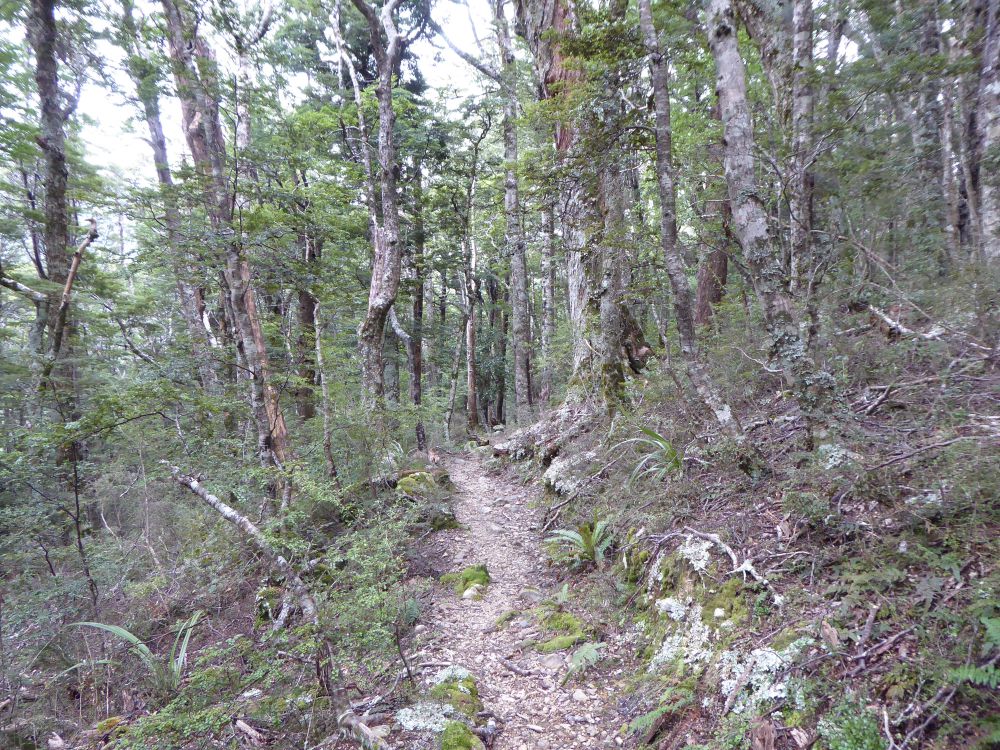
From the car park, Lake Peel Track heads through grass and scrub to Myttons Hut (classed as a Basic Hut, with 4 bunks), which you’ll reach after only 10 min. From Myttons Hut the track climbs the forested valley side through a series of zig-zags. The tree line is reached after 2.3 km, where you emerge into tussock and alpine shrubs. The track from here is a poled route all the way to Balloon Hut, so pay attention to the poles when snow hides the track. It’s a steeper climb from the tree line to the crest of the range.
At the crest of the range there is a T junction with Cobb Ridge Track, which heads left (north). Continue straight, as the track dips into Deep Creek valley and sidles the steep valley side, passing beneath bluffs and across rock slide deposits. The cirque that holds Lake Peel can be seen ahead, though the true summit of Mt Peel is obscured by the ridge that leads to it. The track crosses the outlet of Lake Peel (Deep Creek) and then reaches the lake itself.
A side trip can be made to the summit of Mt Peel (1654 m). There is no official track, though the most commonly used route is straightforward in clear weather conditions. The route begins approx. 1 km south of Lake Peel (towards Balloon Hut), where there is a boulder with a DOC sign attached to it. Climb west onto the crest of the ridge that bounds the western edge of the Lake Peel cirque. Head north along the broad, largely featureless ridge until you reach a small cairn marking the summit at the obvious high point. Return the way you came. Allow an extra 1 hr 30 min return for a summit side trip.
The track climbs out of the southern side of the valley and then descends along the broad Peel Range through snow tussock all the way to Balloon Hut (3.3 km from Lake Peel). Along this section you’ll enjoy views of Mt Arthur and The Twins on fine days.
Balloon Hut is nestled against the tree line at 1260 m elevation. The current hut dates from a refurbishment in 1995. A framed picture on the wall shows the history of the hut, right back to when it was first constructed by gold prospectors in 1909.
| Balloon Hut | |||
| Hut Type | Serviced Hut | Capacity | 14 |
| Bookings | Required | Elevation | 1260 m |
The Tableland behind Mt Arthur first attracted attention during the gold prospecting era of the late nineteenth century. In 1870, explorer and surveyor John Rochfort reported signs of gold in the area, helping spark interest in the remote plateau. By 1871, prospectors had established small diggings on the Tableland, and rough tracks began to spread across the high tussock country. Among the most memorable characters of the district was Billy Lyons, known as the “grand old man of Balloon”, who spent many years prospecting around Balloon Hill and developing water races in search of gold. The first iteration of what is now Balloon Hut was built by prospectors in 1909. The present Balloon Hut was built in 1963 on the site of the original hut. Although the discoveries never led to a major gold rush, these early prospectors helped open up the Tableland, creating routes that later evolved into the tramping tracks and hut network that remains today.
Balloon Hut to Salisbury Lodge
Distance: 4.1 km • Time Required: 1 hr 30 min
Salisbury Lodge is a relatively short distance from Balloon Hut. From Balloon Hut, the track continues south through a corridor of tussock just east of Balloon Hill. It then drops into a karst amphitheatre known as ‘The Clearing’ near the head of Cundy Creek, then climbs back onto another tussock expanse, where the track junction to Leslie-Karamea Track is located (Karamea Bend Hut is 4 hr from here). The track continues through the tussock and passes the turnoff to Starvation Ridge Track. The remainder of the gentle descent to Salisbury Lodge passes through stunted mountain beech and dracophyllum.
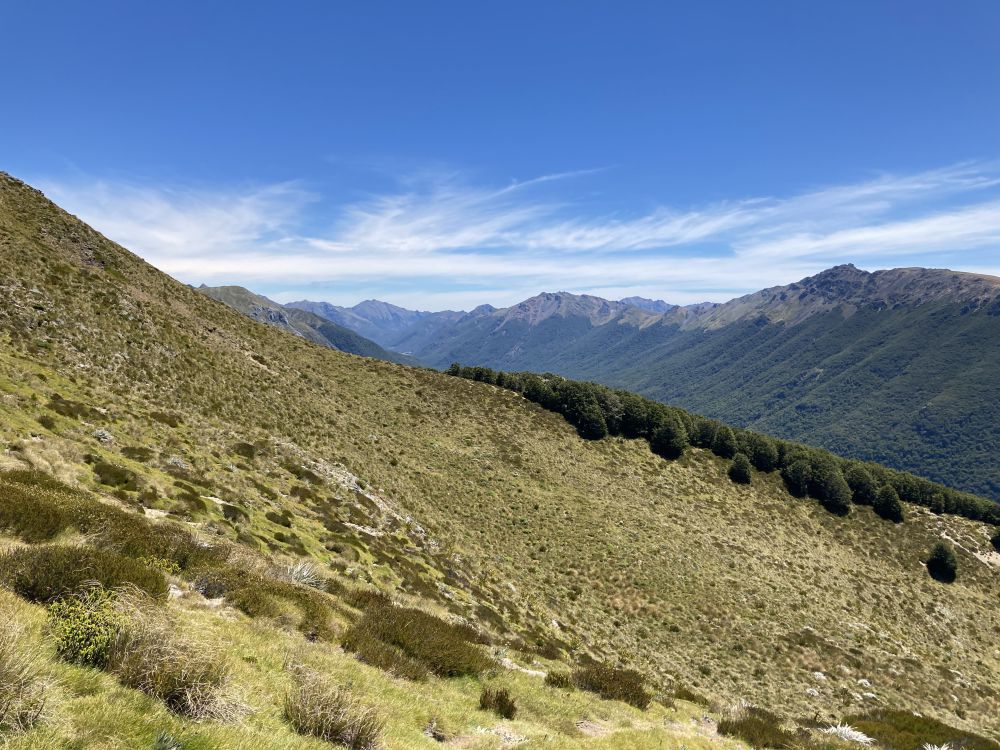
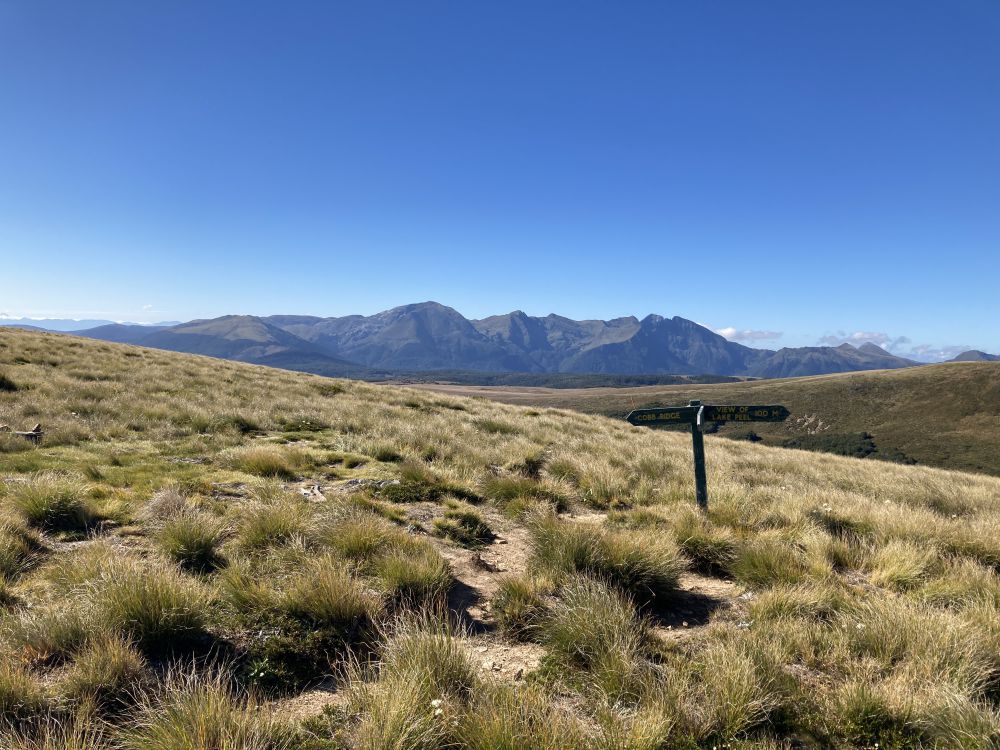
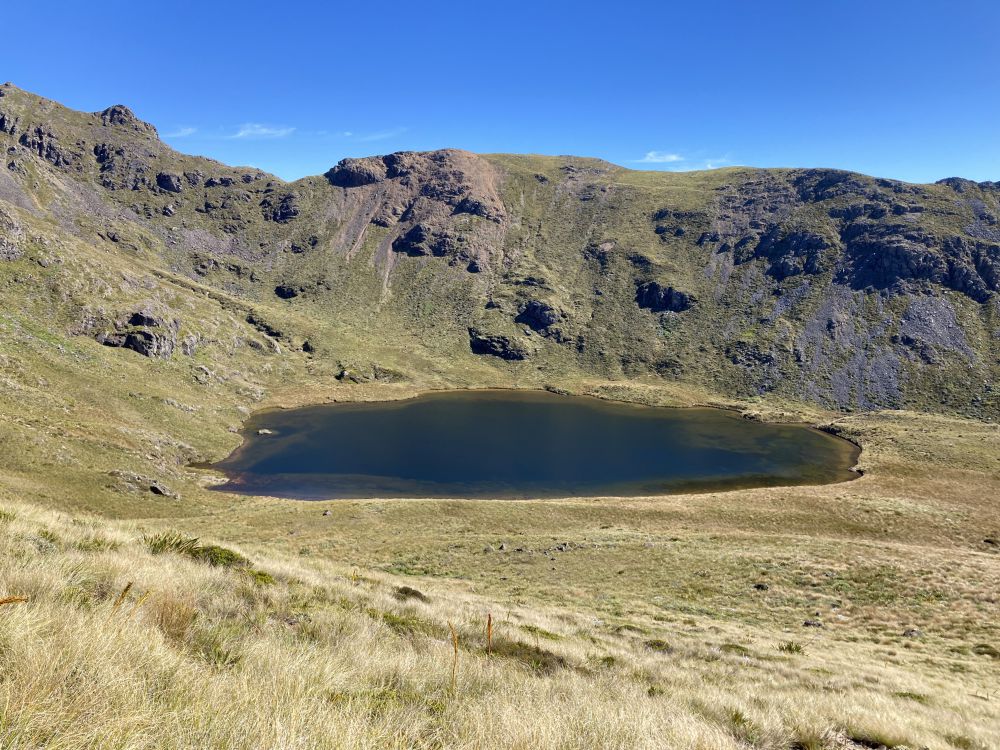
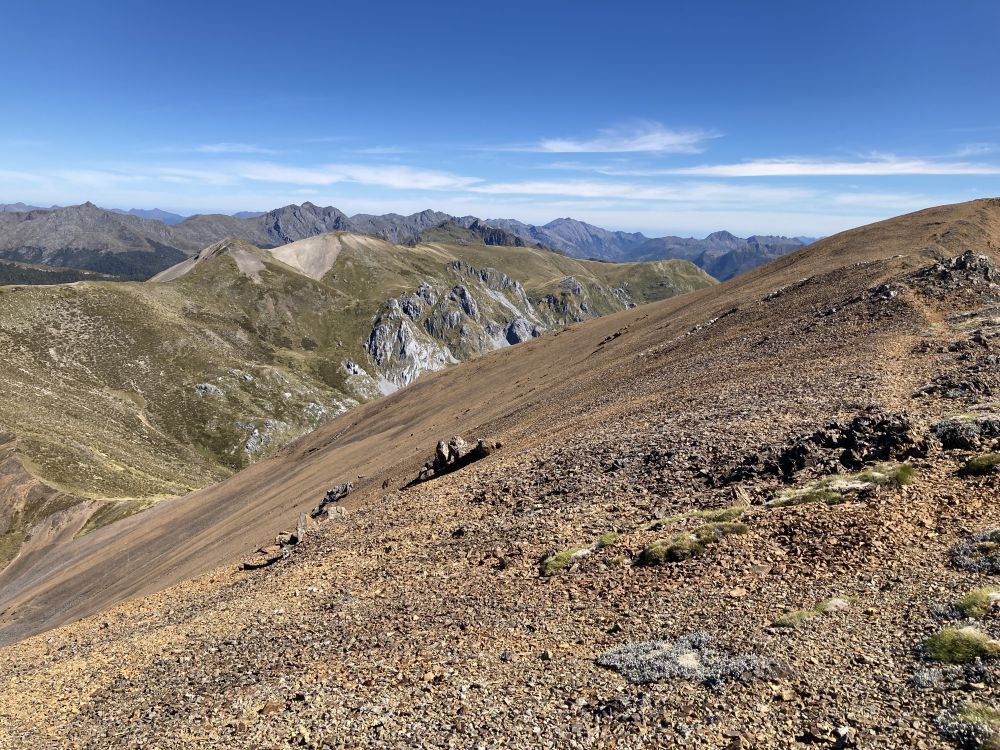
Lake Peel Track traverses an alpine environment, and Peel Range and the Tableland are particularly exposed. Make sure you prepare accordingly, even in summer, as freezing alpine conditions can occur at any time of year. Do not rely on weather forecasts for Motueka or Tākaka as the alpine weather is likely to be drastically different. Be mindful of the karst landscape east of Balloon Hut, where there are hidden caves and sinkholes.
See the Mountain Safety Council website for useful information on preparing for the outdoors.
Sources and further reading
1. Salisbury, R. (2020). Tableland: The History Behind Mt Arthur.
2. The Prow. Mount Arthur and the Tableland.